Suit Up: The Quietly Brilliant Salaryman Anime That's Speaking to Burned-Out Americans
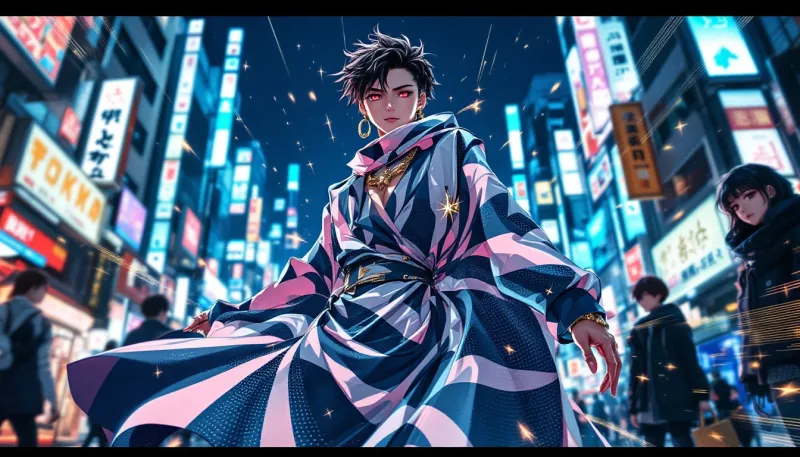
Photo: Japanese businessman commuter suit Tokyo train station anime style, via images.stockcake.com
The salaryman has never been a glamorous figure. In Japanese popular culture, he's practically a stock character — the middle-aged man in the rumpled suit, commuting at dawn, eating convenience store onigiri at his desk, drinking too much with his coworkers because the bar is the only place the hierarchy loosens up a little. He is, by almost every definition, the opposite of aspirational.
And yet, right now, in the middle of an American cultural moment defined by quiet quitting, anti-hustle sentiment, and a collective renegotiation of what work is supposed to mean, the salaryman is having a moment. Not ironically. Not as a punchline. As something approaching a mirror.
What Even Is Salaryman Content?
For the uninitiated, "salaryman" (サラリーマン) refers specifically to white-collar corporate employees in Japan — a demographic that has historically occupied a strange cultural space, simultaneously the backbone of Japan's postwar economic identity and the subject of enormous social critique. The work hours are legendary. The corporate hierarchy is rigid. The expectation to sacrifice personal life for company loyalty is baked into the social contract in ways that have only recently started to crack.
Salaryman-focused manga and anime span a wide range. Some are comedies — Aggressive Retsuko (Aggretsuko) is probably the most well-known Western crossover, following a red panda accountant who screams death metal in a karaoke booth to cope with workplace stress. Some are more dramatic, exploring corporate politics, ambition, and the cost of success. And increasingly, a subgenre has emerged that you might call "isekai adjacent" — the salaryman who escapes, either literally through fantasy-world transport or figuratively through some kind of radical life change.
Why Americans Are Watching
The timing matters here. American work culture has been through a sustained identity crisis since roughly 2020. The pandemic forced a mass renegotiation of work-life balance. The "Great Resignation" signaled that a generation of workers was done accepting the terms their employers had always assumed were non-negotiable. And then came the backlash to hustle culture — the slow, collective realization that optimizing every waking hour for productivity hadn't actually made anyone happier.
Into this environment, salaryman content lands differently than it might have a decade ago. A show about a man who has given everything to his company and wonders what it cost him isn't a cautionary tale from a foreign culture anymore. It's relatable. The specifics are Japanese — the nomikai drinking culture, the senpai-kohai hierarchy, the particular pressure of a lifetime employment system — but the emotional core translates with almost uncomfortable precision.
Aggretsuko was the gateway for a lot of American fans, and Netflix's backing gave it visibility that most anime in this space never gets. But it opened a door that fans have walked through to find a much wider genre. Titles like Wotakoi: Love is Hard for Otaku, which follows adult office workers navigating relationships, or The Way of the Househusband, with its yakuza-turned-domestic-god protagonist navigating the mundane with extreme intensity, have found enthusiastic US audiences who appreciate stories set in adult, professional contexts.
The Aesthetic Is Having Its Own Moment
Here's where it gets interesting for a site like ours: the salaryman visual aesthetic — the structured suit, the slim tie, the functional briefcase, the no-nonsense commuter wardrobe — has started filtering into American menswear and streetwear circles in a way that feels genuinely fresh.
Japanese workwear has long had a dedicated following among menswear enthusiasts who appreciate the quality and cut of brands like Suit Select, The Suit Company, or the elevated basics from UNIQLO's business casual line. But there's a new layer of cultural cachet attached to it now, driven partly by anime fans who've absorbed the aesthetic through the media they love and partly by a broader American interest in "quiet luxury" and understated dressing.
The appeal isn't about emulating corporate conformity — it's almost the opposite. It's about taking the salaryman wardrobe and wearing it with the kind of intentionality and personal ownership that the genre's characters are often denied. It's reclaiming the suit.
The Genre's Unexpected Emotional Range
What surprises first-time viewers of salaryman-focused content is how emotionally sophisticated it can be. The genre isn't interested in glorifying corporate grind — if anything, the best entries in the space are fairly cutting in their critique of what that lifestyle costs. But they're also not nihilistic. There's warmth in the small moments: the coworker friendship that develops over years of shared frustration, the after-work meal that becomes a ritual, the quiet pride in doing a job well even when the job isn't your whole identity.
That emotional texture is part of why the genre resonates so well with post-hustle Americans. It's not telling you to grind harder or to quit and follow your dreams. It's saying that ordinary working life has dignity, that your coworkers are people, and that finding meaning in the margins of your schedule is a legitimate and human thing to do. That's a message that hits differently when you've spent the last several years being told your worth is equivalent to your output.
Where to Start If You're Curious
If you want to dip into this space, Aggretsuko is still the most accessible entry point — it's funny, the episodes are short, and it's on Netflix right now. From there, Wotakoi rewards viewers who want something a little more grounded and romantic. For the crowd that wants something with more dramatic weight, Shinya Shokudo (Midnight Diner) isn't strictly a salaryman show but captures the same after-hours Tokyo energy with gorgeous, melancholy storytelling.
The genre won't be for everyone. It's deliberately low-stakes in a medium often associated with epic battles and supernatural powers. But if you've ever eaten lunch alone at your desk and felt something complicated about it, there's probably a salaryman anime that gets it exactly right.