Before the Stream: The Fansubbers Who Smuggled Anime Into America
Picture this: it's 1998. You're a teenager in a mid-size American city, you've just seen a few episodes of Sailor Moon on Saturday morning TV, and something in your brain has permanently rearranged itself. You need more. But "more" doesn't exist at your local Blockbuster, your library has nothing, and the internet is a dial-up wasteland that takes four minutes to load a single image.
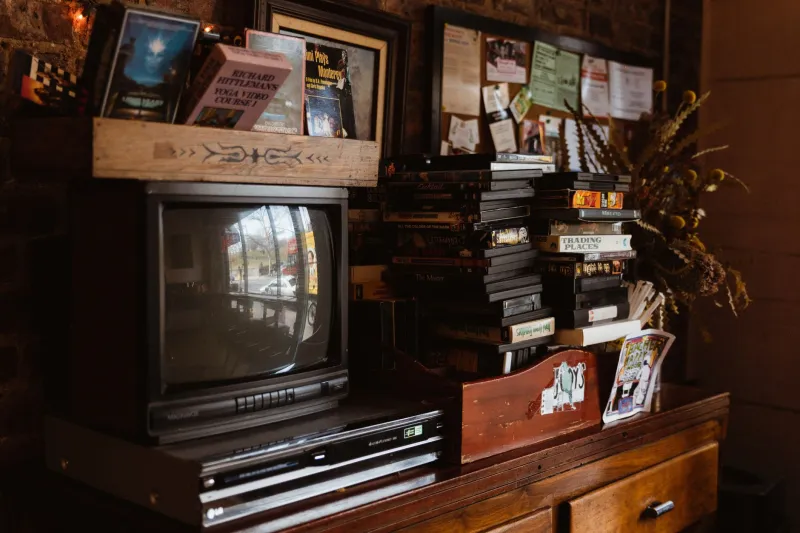
Somehow, though, word gets around. There's a guy at your school who has tapes. VHS copies of copies of copies, the image quality roughly equivalent to watching TV through a rain-soaked window, with English subtitles burned directly onto the picture. The subtitles are a little stiff in places, occasionally hilarious, but they're there. You watch Evangelion for the first time on a tape like this, at a friend's house, on a 13-inch TV.
That tape existed because of fansubbers. And without them, American anime culture as we know it probably doesn't exist.
What Fansubbing Actually Was
Fansubbing — fan-produced subtitling — started in the 1980s as a purely physical operation. Small groups of fans would get their hands on raw Japanese VHS tapes (often through pen pals in Japan, sometimes through import shops), translate the dialogue, time the subtitles manually, and then use specialized video equipment to burn those subtitles onto copies. Those copies got dubbed to more copies, traded at conventions, mailed across the country in padded envelopes.
By the mid-1990s, the process had gone digital. Fansubbers were working with ripped video files, subtitle software, and early internet distribution — IRC channels, FTP servers, eventually BitTorrent. Groups had names that felt like small studios: ANBU, Anime-Kraze, Anime-Faith, Lunar. They had translators, timers, typesetters, quality checkers, and distro teams. The organization was serious. The product was free.
The unwritten rule of the community — and it was genuinely enforced by social pressure — was that you stopped distributing a fansub the moment a legitimate English release existed. The whole operation was framed as preservation and access, not piracy for its own sake. Whether that framing holds up is a longer conversation.
The Shows That Wouldn't Have Made It Otherwise
Here's the concrete impact: a significant chunk of the anime that became mainstream in the US first built its American audience through fansubs.
Naruto had a fansubbed following of hundreds of thousands before Viz Media licensed it. Fullmetal Alchemist was being passed around on forums before Adult Swim picked it up. Haruhi Suzumiya became a genuine cultural phenomenon in US fan communities — memes, cosplay, AMVs — largely through fansubs, which created the demand that made a legitimate release commercially viable.
Licensing companies, to varying degrees, knew this and quietly tolerated it. Some have even said so publicly in retrospect. The fansub audience was essentially a pre-warmed market. Fans who'd already invested emotionally in a show were far more likely to buy the DVD box set when it came out.
The shows that didn't get fansubbed tended not to build American audiences. The selection bias here is real: fansubbers chose what they translated based on what they personally loved, which means the Western anime canon was partially shaped by the tastes of a few hundred dedicated volunteers in the late '90s and early 2000s.
The Ethics Were Always Complicated
Let's not romanticize this too hard, because the people who were actually doing it weren't naive about what they were doing.
Fansubbing was copyright infringement. Full stop. The "we stop when it's licensed" rule was a community norm, not a legal defense, and it wasn't always followed consistently. Some groups kept distributing long after legitimate releases existed. Some fans never bought the official version even when it was available and affordable.
Japanese rights holders had genuinely mixed feelings. Some were furious. Others saw it as free marketing. The industry's official position was always opposition, but the enforcement was selective and often toothless given the geography involved.
The translation quality also varied wildly. Some fansubbers were genuinely skilled translators who cared deeply about accuracy and cultural context. Others were working from machine translation plus vibes. Whole generations of American fans formed their understanding of specific shows, characters, and Japanese cultural concepts through translations that ranged from excellent to actively misleading.
There are people who still feel strongly that their fansub version of a show is the "real" version — even when the official translation is objectively more accurate — because that's the one that got to them first, in a formative moment, on a bad VHS tape at 2 AM.
When Crunchyroll Arrived and What It Changed
The shift happened gradually and then all at once. Crunchyroll launched in 2006, initially as — yes — an unlicensed streaming site before pivoting to a legitimate licensing model around 2009. Funimation, Viz, and others built out their digital offerings. Simulcasting became standard: new episodes available legally in English within hours of their Japanese broadcast.
Fansubbing didn't die immediately, but it hollowed out fast. The main argument for fansubbing — access — collapsed when legal access became instant and cheap. The groups that had been the backbone of the community through the 2000s quietly wound down or shifted to niche content that wasn't being licensed.
What they left behind was structural. The audience they built, the shows they championed, the community norms they established around watching and discussing anime — all of that became the foundation that legal streaming companies built their businesses on.
What We Owe the Tape People
This is the part that's genuinely hard to reconcile: American anime culture owes an enormous debt to people who were doing something legally indefensible.
The streaming era is better in almost every measurable way — faster, cheaper, higher quality, and the people who actually make the anime see some financial return. That matters. But the path to this moment ran directly through IRC channels and padded envelopes and rooms full of teenagers watching blurry VHS tapes of shows that no American company had yet decided were worth buying.
Fansubbers didn't just keep anime alive in America. They decided what American anime fandom would care about, what it would talk about, and what it would eventually be willing to pay for. That's a legacy that doesn't fit neatly into a legal or moral box — which is probably why the conversation about it never quite ends.